 Brief ProfileProf (Dr) Pawan K (PK)GuptaPh D (Toxicology), Post doctorate in Toxicology (USA), Hon DSc, PGDCA, FACVT (USA), FAEB, FST, FASc AW, FNA VScAward Winner - Astra-Zeneca-IUTOX (USA), Alarsin and Lifetime Distinguished Scientist Awards, Cited and Biographies in WHO’S WHO of
National and International publishersCited in Book of Records (UP) for outstanding documentation in ToxicologyDirector, Toxicology Consulting Group andPresident, Academy of Sciences for Animal WelfareExpert Consultant and Social ActivistPatron and Founder, Society of Toxicology of IndiaConsultant to Government of India and International AgenciesFounder Editor-in-Chief, Toxicology International (published byWolters Kluwer- Medknow (online publication) website: toxicologyinternational.com,FormerlyPrincipal Scientist and Chief Division of Pharmacology and Toxicology, IVRIScientist-In-charge Sponsored Projects Toxicology, Indian Institute of Toxicology Research (Formerly ITRC), LucknowAdvisor, World Health Organization (Geneva)Visiting Professor, University of Tennessee, USAVisiting Professor, West Virginia University, Morgan Town, USAResearch Officer, Department of Pharmacology, Post-graduate Institute of Medical Education & Research, Chandigarh, IndiaSr Lecturer, Department of Biophysics, Punjab University, ChandigarhFounder Director, International Union of Toxicology, USAPast President (two times): Rotary Club District 3110Prof. Dr. Gupta is an internationally known toxicologist with more than 50 years of experience in the field of teaching, research and as research management in toxicology. He has guided many post-graduate students for their thesis work in toxicology and was honored with several National and International Awards including best teachers, best researcher, Alarsin, Lifetime achievements, and IUTOX-Astra Zeneca Award (USA). To his credit he has several books, book chapters (John Wiley, Elsevier, Academic Press, Merck & Co. Mariel Limited and Springer USA) as well as scientific research publications (588) published in National and International peer reviewed Journals of repute. His contribution in the publication of Indian Veterinary Pharmacopeia is highly praise worthy. He is the founder Editor-in-Chief of a peer reviewed scientific journal “Toxicology International”, and has been the Book Review Editor, Marcel Dekker, USA; Expert member Consultant and Advisor to WHO, Geneva; Consultant United Nations FAO, Rome; IAEA, Vienna; Founder Academy of Sciences for Animal Welfare; Founder and Past President, Society of Toxicology of India; Adjunct Professor, SRMS; founder director and member nominating committee of International Union of Toxicology; founder President of Society of Toxicology of India, and has held several prominent positions of scientific organizations in India and abroad. In addition to this Dr. Gupta has also been biographer in several WHO's WHO from all over the world including Marquis WHOs WHO (USA), IBC (UK) and other leading publications of the World. At present Dr. Gupta is Editor-in-Chief of peer reviewed PUBMED indexed scientific Journal “Toxicology International, Patron and Founder President of the Society of Toxicology of India, and President of the Academy of Sciences for Animal Welfare. Dr. Gupta has widely traveled all over in USA, Canada, Mexico, Great Britain, Belgium, The Netherland, France, Germany, Switzerland, Italy, Hong Kong, Ireland, Russia, Thailand, China, etc. to visit their laboratories and to deliver lectures (visiting Professor, University of Tennessee and West Virginia University, USA) in specialty areas of toxicology.Expert ConsultantExpert member Consultant and Advisor to WHO, Geneva; Consultant United Nations FAO, Rome; IAEA, Vienna; and Government of IndiaWidely travelled to chair scientific sessions and deliver lectures in various countries such as USA, Canada, Mexico, Great Britain, Belgium, The Netherland, France, Germany, Switzerland, China Russia, Etc.Editorial ResponsibilitiesEditor-in-Chief, Three-volume set on Modern Toxicology; Advances in Environmental Toxicology and Health; and Toxicology International, a peer reviewed Journal 1994-2015.Honor to have served as book review Editor from 2002-2008, Marcel Dekker USAEditorial Board, Member, Clinical Toxicology, Indian Journal of Pharmacology; Editor-in-Chief, Indian Journal of Toxicology. Honors: Gold Medals; Best Teachers Award; Alarsin Gold Medal Awards and Scroll of Honor, IUTOX Award. Listed in numerous Who’s Who, IBC and other leading biography publications.Positions held in Professional Societies:Lifetime Membership of Societies: Two dozen Societies: and held several key positions such as Director and Councilor, International Union of Toxicology (IUTOX), USA; 1980-1983, 1983-1986, IUTOX Nominating Committee member 1987-1990; Founder President, Society of Toxicology, India, 1979-1980, General Secretary, 1980-83., President, 1984-87, 1987-1990;; Executive Committee Member, All India Veterinary Scientists Association; Vice President, Academy of Environment Biology; 1980-1983, 2003-2006, FAO 1990, IAEA 1985-1990. President, Rotary International Rotary Club Mahaan, 1999-2000, Rotary Club Vishal 2006-2007 (Rotary International) District 3110.AwardsAbout 200 honors and awards including Best Teacher, Best researcher and five times Lifetime achievement, AstraZeneca Award, Six Gold Medals, Alarsin Drug Company award and listed in book records for unique documentation in the field of toxicologyPublicationsTo his credit he has several books, book chapters (John Wiley, Elsevier, Academic Press, , Merck & Co. Merial Limited and Springer, USA). Author of Books, Veterinary Toxicology; Pesticides in the Indian Environment; Essential Concepts in Toxicology; Fundamentals of Toxicology (Elsevier, USA); Essential concepts in Toxicology (BSP), Hyderabad), Illustrative Toxicology (Elsevier, USA). Selected ones include:Research publications 705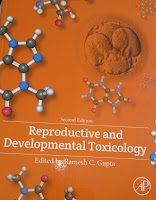 Books 9Book chapters 118Review articles 41Books reviewed 35Blogs 60Total 705
 Gupta PK. (2018) Herbicides and Fungicides. In Reproduction and Development Toxicology, Gupta RC (ed.) Elsevier, USAGupta PK, (2018) Basic and Clinical Principals, Gupta RC (ed.) 3nd ed. Elsevier, USA chapter 37 in pressGupta PK, (2018) Epidemiology of Animals Poisonings in Asia. In Veterinary Toxicology- Basic and Clinical Principals, Gupta RC (ed.) 3nd ed. Elsevier, USA pp57-69.Gupta PK, (2018) Toxicity of fungicides. In Veterinary Toxicology- Basic and Clinical Principals, Gupta RC (ed.) 3nd ed. Elsevier, USA pp569-582.Gupta PK (2018) Toxicity of herbicides. In Veterinary Toxicology- Basic and Clinical Principals, Gupta RC (ed.) 3nd ed. Elsevier, USA pp553-568.
 Gupta PK (2018) Illustrative Toxicology with Question bank. 1st Edition. Elsevier, USAGupta PK (2018) Regulatory guidelines for nutraceuticals and food supplements in India. In: Nutraceuticals in Veterinary Medicine. Gupta RC (ed). Springer (in press)Gupta PK (2016) Fundamentals of Toxicology: Essential concepts and applications. 1st Edition. ISBN-9780128054260, pp 438, BSP/Elsevier, USAGupta, P K (2016). Herbicide Poisoning. In: The Merck Veterinary Manual 11th edition, Merck & Co. Inc. Whitehouse Station, NJ, USA 2969-99Gupta, P K (2016). Pentachlorophenol Poisoning. In: The Merck Veterinary Manual 11th edition, Merck & Co. Inc. Whitehouse Station, NJ, USA pp 3052-53
 Gupta, P K (2014) Herbicides and Fungicides. In Biomarkers in Toxicology, Gupta RC (ed.) Elsevier, USA pp 409 to 431Gupta PK, Agarwal M (2012) Toxicity of fungicides. In Veterinary Toxicology- Basic and Clinical Principals, Gupta RC (ed.) 2nd ed. Elsevier, USA pp 653-670.Gupta PK (2012) Toxicity of herbicides. In Veterinary Toxicology- Basic and Clinical Principals, Gupta RC (ed.) 2nd ed. Elsevier, USA pp 631-652.Gupta PK (2011) Herbicides and Fungicides. In Reproduction and Development Toxicology, Gupta RC (ed.) Elsevier, USA pp 503-521Gupta PK (2004) Pesticide Exposure-Indian scene. Toxicology 198: 83-90.Gupta PK (2010) Modern Toxicology, Basis of organ and reproduction toxicity. Vol 1. Published by Pharma Med Press (A unit of BSP Books Pvt. Ltd). Hyderabad, India pp 1-460.
 Gupta PK (2010) Modern Toxicology, Adverse effects of xenobiotics. Vol 2, Published by PharmaMed Press (A unit of BSP Books Pvt. Ltd). Hyderabad, India pp 1-460.Gupta PK (2010) Modern Toxicology, Immuno and clinical toxicology Vol 3. Published by PharmaMed Press (A unit of BSP Books Pvt. Ltd). Hyderabad, India pp 1-340.Gupta PK (2016) Essential Concepts in Toxicology. Published by PharmaMed Press (A unit of BSP Books Pvt. Ltd), Hyderabad, India pp 362.Gupta PK (2010) Herbicide Poisoning. In: The Merck Veterinary Manual 10th edition, Merck & Co. Inc. Whitehouse Station, NJ, USA pp2557-87.Gupta PK (2010) Epidemiology of anticholinesterase pesticides: Indian scenario. In Anticholinesterase Pesticides: Metabolism Neurotoxicity and Epidemiology, Satoh T, Gupta RC, (eds.) pp 417-431, John Wiley, USAGupta PK (2007) Toxicity of herbicides. In Veterinary Toxicology- Basic and Clinical Principals, Gupta RC (ed.) 1st ed. Elsevier, USA pp 567-586.Gupta PK, Agarwal M (2007) Toxicity of fungicides. In Veterinary Toxicology- Basic and Clinical Principals, Gupta RC (ed.) 1st ed. Elsevier, USA pp 587-601.Gupta PK (2006a) WHO/FAO guidelines for cholinesterase –inhibiting pesticide residues in food. In Toxicology of Organophosphorus and Carbamate Compounds, Gupta RC (ed.), Elsevier, USA pp 643-654.Blogs
 Gupta P.K. (2018) Gupta's Series 9: TOXICOLOGY Questions. https://www.blogger.com/blogger.g?blogID=6121665387772622754 All solutions you need
Gupta P.K. (2018) Series 8: True and False, and Match the statements- TOXICOLOGY Questions. https://www.blogger.com/blogger.g?blogID=6121665387772622754#allposts dt 12th Feb 2018Gupta P.K. (2018) Series 7: Multiple Choice Questions and fill in blanksTOXICOLOGY Question https://www.blogger.com/blogger.g?blogID=6121665387772622754#allposts dt 10th Feb 2018Gupta P.K. (2018) Series 6: Multiple Choice Questions TOXICOLOGY Question and Answer bank https://www.blogger.com/blogger.g?blogID=6121665387772622754#editor/target=post;postID=1504049270973270903;onPublishedMenu=allposts;onClosedMenu=allposts;postNum=0;src=postname dated 8th Feb 2918Gupta P.K. (2018) Series 5:- Risk Assessment- TOXICOLOGY Question and Answer bank https://www.blogger.com/blogger.g?blogID=6121665387772622754#editor/target=post;postID=7074490986156275095;onPublishedMenu=allposts;onClosedMenu=allposts;postNum=1;src=postname dated 7th Feb 2018 https://www.linkedin.com/.../series-4-toxicology-question-answer-bank-dr-pawan-ku... Feb 4, 2018 Cont'd from series 3.https://www.linkedin.com/.../series-3-toxicology-question-answer-bank-dr-pawan-ku...Jan 26, 2018Gupta P.K. (2018) Series 2:TOXICOLOGY Question and Answer bank : Allsolutionsyouneed.blogspot.com/: Jan 16, 2018Gupta P.K. (2018) Series 1: TOXICOLOGY Question and Answer bank- series 1st: Allsolutionsyouneed.blogspot.com/: Jan 16, 2018Gupta P.K. (2016) What we should eat? | All solutions you need: Aug 16, 2016 https://plus.google.com/101816917529038358576/posts/L4JKWzHK5MsGupta P.K. (2016) Why should we avoid bottled water? | All solutions you need Jul 31, 2016 - https://plus.google.com/.../posts/Te5CMiBTSA2Gupta P.K. (2016) Foods that contain Magnesium and its usefulness dated Jun 20, 2016. allsolutionsyouneed.blogspot.com/Gupta P.K. (2016) Causes of magnesium deficiency dated Jun 23, 2016. allsolutionsyouneed.blogspot.com/Gupta P.K. (2016) Five Top Suggestions and Treatment for Constipation Jan 28, 2016. allsolutionsyouneed.blogspot.com/ https://www.linkedin.com/Gupta P.K. (2016) Is There Specific Treatment for Magnesium Deficiency? Jun 23, 2016. allsolutionsyouneed.blogspot.com/Gupta P.K. (2016) How to know if you are Magnesium Deficient? Jun 24, 2016. allsolutionsyouneed.blogspot.com/Gupta P.K. (2016) If you are Magnesium Deficient, What you can Do? Jun 24, 2016. allsolutionsyouneed.blogspot.com/ 2016/06/https://plus.google.com/.../posts/4V26LmqwursGupta P.K. (2016) Suggestion for oral use of Magnesium Sulphate (powder) Jun 25, 2016. allsolutionsyouneed.blogspot.com/2016/ http://allsolutionsyouneed.blogspot.com/2016/06/suggestion-for-oral-use-of-magnesium.htmlGupta P.K. (2016) Importance of zinc in our body. Jun 26, 2016. allsolutionsyouneed.blogspot.com/2016/ https://plus.google.com/101816917529038358576Gupta P.K. (2016) Problems associated with zinc deficiency and how to treat. Jun 29, 2016. allsolutionsyouneed.blogspot.com/Gupta P.K. (2016) HEALTH HAZARDS OF ELECTROMAGNETIC RAYS FROM MOBILE PHONE, RADIO, X- RAY SUN-RAYS AND OTHER SOURCES June 30, 2016, allsolutionsyouneed.blogspot.com/.blogspot.com/Gupta P.K. (2016) HEALTH HAZARDS OF ELECTROMAGNETIC RAYS FROM MOBILE PHONE, RADIO, X- RAY SUN-RAYS AND OTHER SOURCES (Cont`d)! All solutions you need:: Jul 1, 2016, allsolutionsyouneed.blogspot.com/.blogspot.com/Gupta P.K. (2016) Deficiency diseases-know about your teeth discoloration! All solutions you need:: Jul 3, 2016, allsolutionsyouneed.blogspot.com/.Gupta P.K. (2016) Medicine that can discolour your teeth! All solutions you need. Jul 4, 2016, allsolutionsyouneed.blogspot.com/Gupta P.K. (2016) Seven Tips to Avoid Discoloration of Teeth! All solutions you need. Jul 7, 2016, allsolutionsyouneed.blogspot.com/.Gupta P.K. (2016) Tips to improve your health! All solutions you need: Jul 9, 2016, allsolutionsyouneed.blogspot.com/.Gupta P.K. (2016) Tips to improve your health: Sources of protein! All solutions you need: Jul 11, 2016, allsolutionsyouneed.blogspot.com/. blogspot.com/Gupta P.K. (2016) Health problems associated with protein and EFA deficiencies! All solutions you need:Jul 11, 2016, allsolutionsyouneed.blogspot.com/.blogspot.com/Gupta P.K. (2016) Tips of the day: Vitamins for your body | All solutions you need: Jul 12, 2016,allsolutionsyouneed.blogspot.com/2016, allsolutionsyouneed.blogspot.com/Gupta P.K. (2016) How much safe is bottled water? All solutions you need: Jul 25,| 2016,https://plus.google.com/.../posts/JD7sYJ5EZfy-Contact addressProf (Dr) PK GuptaC-44, Rajendra Nagar, Bareilly, 243 122 (UP) IndiaCell 09359104922 / 8218924653
- upta P.K. (2018) Series 9: TOXICOLOGY Questions. https://www.blogger.com/blogger.g?blogID=6121665387772622754#allposts dt 12th Feb 2018
- Gupta P.K. (2018) Series 9: TOXICOLOGY Questions. https://www.blogger.com/blogger.g?blogID=6121665387772622754#allposts dt 12th Feb 2018
- Gupta P.K. (2018) Gupta series 9: TOXICOLOGY Questions.and answers https://www.blogger.com/blogger.g?blogID=6121665387772622754#allposts dt 12th Feb 2018
- Gupta P.K.
- (2018) Series 8: True and False, and Match the statements- TOXICOLOGY Questions. https://www.blogger.com/blogger.g?blogID=6121665387772622754#allposts dt 12th Feb 2018
- B

Thursday, 15 March 2018




Epidemiology of Animal Poisonings in Asia by Dr Pawan K (PK) Gupta
Chapter 4

 INTRODUCTION
It is well known that human, animal, and wildlife population are continuously exposed to environmental polluting agents that are harmful to health (Gupta, 1986). Among them are natural and manmade chemicals such as metals, pesticides, organic and inorganic substances, and animal
venoms and toxins, including algal growth and industrial wastes to which domestic animals and wildlife are frequently exposed (Gupta, 2010a,b). In recent years, despite the increasing level of regulation in the use and sale of such products in Asia, their commercialization has intensified. Consequently, many cases of accidental poisoning have occurred. In addition, due to the continuous use of these poisons, accidental or otherwise, these cases have drastically increased all over the world, particularly in developing countries. There is an ongoing need for careful assessment of the risks caused by exposure to these
chemicals. Information on the assessment of toxicity caused by these chemicals mainly comes from human and animal studies (Smith, 2001). However, some supporting information may also be obtained from clinical and in vitro studies. There are no reliable estimates of how many animals suffer from acute poisonings or due to long-term exposure. In general, epidemiology has been
particularly helpful in the evaluation of working environments or other environments where exposure concentrations are relatively high. However, several factors limit the use of epidemiological studies by regulatory agencies (Gupta, 2010a). For example, it is difficult to define the causal elements in epidemiological investigations, particularly when complex exposures are involved. Another imitation
is the frequent movement of animal populations and a large number of animal species available. As such, studies on one population under controlled conditions may be difficult to apply to predict health effects on another animal population. In some developed countries such as the United States, human poison control centers also collect data on animals. In developing countries where there is hard evidence of poisoning including sporadic incidents involving livestock and pets, surveillance is conducted by the veterinary institutions/departments or by the wildlife departments of each country. However, a centralized veterinary poison control/information center does not exist in most countries in Asia. Therefore, in many Asian countries information related to animal poisoning is either unavailable or inadequate and refers only to isolated case reports when it does exist. Occasionally, epidemiological data on animal poisoning gathered by universities, research institutes, government institutions, or independent laboratories has been published in some local journals, which at times
becomes difficult to trace. It is therefore easy to conclude that available data are inadequate to provide sound estimates of the real incidence of poisonings in animal populations and are very likely to be subjected to significant under-reporting (Litchfield, 2005; Gupta, 2016). This chapter focuses on some of the most important poisonous chemicals and plants in Asia and provides an overview
of the poisoning episodes that have occurred in Asian countries.
CONCLUDING REMARKS AND FUTURE
DIRECTIONS
Animals are exposed to potentially toxic agents on a daily basis but the lack of a central reporting agency for animal poisonings makes epidemiological study difficult. With no mandated reporting, many suspected poisoning cases are managed by the attending veterinarian and forgotten. Poisonings are a serious cause of morbidity and mortality in animals, particularly in domestic animals such as cattle (including buffaloes) and dogs; farm animals such as cattle, sheep, goats, poultry; and wild animals and vultures (but rarely cats or other animals). Drug poisonings in animals occur commonly due to off-label use of medicines, wrong dosage, negligence, accidental ingestion, and deliberate poisonings. Accidental or malicious poisonings are due to organophosphorus and carbamate insecticides, fumigants such as aluminum phosphide and zinc phosphide, rodenticides, and rarely due to other agents. Most production animals are kept in some form of confinement, which limits the potential for exposure to toxic agents. However, mistakes in management, such as feed mixing errors or improper ventilation, may result in acute or chronic toxicosis in large number of animals. The most common amongst them is due to nitrateand nitrites, fluoride, Se, Cu (common in sheep) ingestion
of plant, or paddy straw. The other common sources of poisoning include mycotoxins, botulinum, and ionophores (monensin, lasalocid, narasin, and salinomycin). Contamination of feed with antibiotics, pesticides, metals and with other toxins is quite common but their long terms effects are still nknown. For example, in the absence of any systematic survey, the extent to which household kerosene and solid fuels-biomass (wood, agricultural residues, and animal dung) and coal fuels cause long-term damage including morbidity and mortality in companion animals is currently unclear. The scarcity of
adequate epidemiologic and exposure investigations in various Asian countries and the potential for short- and long-term exposure to a vast variety of agents, including household use products and chemicals, suggest a need for agencies to collect epidemiological data on human beings and animals.
for details plz see original article Chapter 4


It is well known that human, animal, and wildlife population are continuously exposed to environmental polluting agents that are harmful to health (Gupta, 1986). Among them are natural and manmade chemicals such as metals, pesticides, organic and inorganic substances, and animal
venoms and toxins, including algal growth and industrial wastes to which domestic animals and wildlife are frequently exposed (Gupta, 2010a,b). In recent years, despite the increasing level of regulation in the use and sale of such products in Asia, their commercialization has intensified. Consequently, many cases of accidental poisoning have occurred. In addition, due to the continuous use of these poisons, accidental or otherwise, these cases have drastically increased all over the world, particularly in developing countries. There is an ongoing need for careful assessment of the risks caused by exposure to these
chemicals. Information on the assessment of toxicity caused by these chemicals mainly comes from human and animal studies (Smith, 2001). However, some supporting information may also be obtained from clinical and in vitro studies. There are no reliable estimates of how many animals suffer from acute poisonings or due to long-term exposure. In general, epidemiology has been
particularly helpful in the evaluation of working environments or other environments where exposure concentrations are relatively high. However, several factors limit the use of epidemiological studies by regulatory agencies (Gupta, 2010a). For example, it is difficult to define the causal elements in epidemiological investigations, particularly when complex exposures are involved. Another imitation
is the frequent movement of animal populations and a large number of animal species available. As such, studies on one population under controlled conditions may be difficult to apply to predict health effects on another animal population. In some developed countries such as the United States, human poison control centers also collect data on animals. In developing countries where there is hard evidence of poisoning including sporadic incidents involving livestock and pets, surveillance is conducted by the veterinary institutions/departments or by the wildlife departments of each country. However, a centralized veterinary poison control/information center does not exist in most countries in Asia. Therefore, in many Asian countries information related to animal poisoning is either unavailable or inadequate and refers only to isolated case reports when it does exist. Occasionally, epidemiological data on animal poisoning gathered by universities, research institutes, government institutions, or independent laboratories has been published in some local journals, which at times
becomes difficult to trace. It is therefore easy to conclude that available data are inadequate to provide sound estimates of the real incidence of poisonings in animal populations and are very likely to be subjected to significant under-reporting (Litchfield, 2005; Gupta, 2016). This chapter focuses on some of the most important poisonous chemicals and plants in Asia and provides an overview
of the poisoning episodes that have occurred in Asian countries.
CONCLUDING REMARKS AND FUTURE
DIRECTIONS
Animals are exposed to potentially toxic agents on a daily basis but the lack of a central reporting agency for animal poisonings makes epidemiological study difficult. With no mandated reporting, many suspected poisoning cases are managed by the attending veterinarian and forgotten. Poisonings are a serious cause of morbidity and mortality in animals, particularly in domestic animals such as cattle (including buffaloes) and dogs; farm animals such as cattle, sheep, goats, poultry; and wild animals and vultures (but rarely cats or other animals). Drug poisonings in animals occur commonly due to off-label use of medicines, wrong dosage, negligence, accidental ingestion, and deliberate poisonings. Accidental or malicious poisonings are due to organophosphorus and carbamate insecticides, fumigants such as aluminum phosphide and zinc phosphide, rodenticides, and rarely due to other agents. Most production animals are kept in some form of confinement, which limits the potential for exposure to toxic agents. However, mistakes in management, such as feed mixing errors or improper ventilation, may result in acute or chronic toxicosis in large number of animals. The most common amongst them is due to nitrateand nitrites, fluoride, Se, Cu (common in sheep) ingestion
of plant, or paddy straw. The other common sources of poisoning include mycotoxins, botulinum, and ionophores (monensin, lasalocid, narasin, and salinomycin). Contamination of feed with antibiotics, pesticides, metals and with other toxins is quite common but their long terms effects are still nknown. For example, in the absence of any systematic survey, the extent to which household kerosene and solid fuels-biomass (wood, agricultural residues, and animal dung) and coal fuels cause long-term damage including morbidity and mortality in companion animals is currently unclear. The scarcity of
adequate epidemiologic and exposure investigations in various Asian countries and the potential for short- and long-term exposure to a vast variety of agents, including household use products and chemicals, suggest a need for agencies to collect epidemiological data on human beings and animals.
for details plz see original article Chapter 4
Gupta PK, (2018) Epidemiology of Animals Poisonings in Asia. In Veterinary Toxicology- Basic and Clinical Principals, Gupta RC (ed) 3nd ed Elsevier, USA pp57-70
Wednesday, 14 March 2018
In
Definitions
,
dose response
,
drug interactions
,
efficacy
,
LD50
,
margin of safety
,
potency
,
potentiation
,
principles of toxicity
,
Question and Answers
,
synergism
,
therapeutic index
,
toxicity
,
toxicology
//
//
Leave a Comment
Gupta's Series 1: TOXICOLOGY Question and Answer bank

General Toxicology: TOXICOLOGY Question and Answer bank
INTRODUCTION
TOXICOLOGY Question and Answer bank is aimed to make the study of toxicology simple and understandable through illustrations, images, custom made drawings, self-explanatory tables, and questions and answers collated from standard and authoritative textbooks, and widely scanned. The author’s own experience in different branches of toxicology including environmental and veterinary toxicology has been abstracted in these series of articles. This is first articles of series. The article has been written in a manner to stimulate interest on various facets of the subject and make it more exciting. It is general experience that theoretical description does not attract as much attention and interest as the illustrations and images. At the same time the information learnt through questions and their satisfactory replies make the topics easier to grasp them.
The book provides comprehensive quick reference for various examinations. However, it should be noted that this series serve only as a supplement and not as a replacement for any textbook and class room learning.
The series is expected to cover several topics such as general toxicology, principles of toxicology, risk assessment, disposition, mechanism of toxicity, toxic effects of various xenobiotics, poisonings of poisonous and venomous organisms, plant toxins, poisonous and food poisonings, radiation hazards and, abuse of drugs. The following series will also the adverse effects on environment and ecosystem exposed to various toxicants and poisonings as relevant to domestic and other animals.
Each article will be in the format of questions and answers, multiple choice questions, true and false statements or correct/ incorrect statements, fill in blanks, and matching the statements that will be useful for students, teachers and practicing in medical sciences, toxicology, pharmacology, medicine, pharmacy, environmental toxicology and in veterinary sciences.
WHO will be benefitted
The author believes that these series would be:
- A good alternative to be used for various courses and an excellent contribution for the students who needs a study aid for toxicology but wants more than a textbook as they need a self-testing regime.
- The teachers of toxicology who needs inspiration when composing questions for their students.
- The established toxicologists who wants to test their own knowledge of understanding the subject matter.
- Will be useful at universities and colleges, in industry for in-house training courses in toxicology which I know exist in some pharmaceutical and chemical companies
- Required for studying for the toxicology Boards and for preparation of different examinations.
Thus, the main strength of the series will reflect the breadth and multi-disciplinary nature of toxicology with illustrative approach to the subject that is needed to improve engagement with and understanding of the subject having a very wide audience.
Toxicology is a rapidly evolving field. Suggestions and comments are welcome to help the author improve the contents of the series. Please also suggest or send comments at drpkg_brly@yahoo.co.in ordrpkg1943@gmail.com
GENERAL TOXICOLOGY
Q. What is toxicology?
Toxicology is the study of the adverse effects of chemicals or physical agents on living organisms. The word ‘toxicology’ is derived from the Greek word ‘toxicon’ which means ‘poison’ and logos means to study. It also includes study of special effects of toxicants developmental toxicity, teratogenicity, carcinogenicity, mutagenesis, immune-toxicity, neurotoxicity, endocrine disruption, etc.
Q. Who is the father of rational medicine?
Hippocrates (460-375 BC) is regarded as the “Father of Rational Medicine”. He created the Hippocratic oath. He believed that disease came naturally and not from superstitions and GOD. He advocated hot oil as an antidote in poisoning and induced vomiting to prevent absorption of the poisons.
Q. What do you know about Paracelsus?
Hohenheim-Paracelsus (1493–1541) a first century Roman physician, who promoted a focus on the toxicon, the toxic agent, as a chemical entity. He recognized the dose-response concept and in one of his writings stated, “All substances are poisons, there is none which is not a poison. The right dose differentiates a poison and a remedy”.
Q. Who is Friedrich Serturner? What is his contribution?
Friedrich Serturner (1783-1841), German pharmacist who isolated the specific narcotic substance from opium and named as morphine after Morpheus, the Roman God of sleep.
Q. Who is a Father of Toxicology?
M J B (Mattie Josesph Benaventura) Orfila (1787-1853), a Spanish physician is a considered as “Father of Toxicology”.
Q. Describe main contributions of M J B Orfila (1787-1853).
He established toxicology as a discipline distinct from others and defined toxicology as the study of poisons. He advocated the practice of autopsy followed by chemical analysis of viscera to prove that poisoning has taken place. His “treatise” Traite des Poisons published in 1814 laid the foundations of forensic toxicology.
Q. Who is father of experimental pharmacology? Describe in brief his contributions.
Francois Magendie (1783-1855) is known as the “Father of Experimental Pharmacology”, a pioneer French physiologist and toxicologist studied the mechanism of action of emetine, morphine, quinine, strychnine and other alkaloids.
Q. Who was Claude Bernard?
Claude Bernard (1813-1878) was a French physiologist who is considered the "Father" of Modern Experimental Physiology. Claude Bernard's first important works were carried out on the physiology of digestion, particularly the rôle of the pancreas exocrine gland, the gastric juices and of the intestines. In addition to this, Bernard also made other important contributions to the neurosciences.
Q. Who was Louis Lewin (1854-1929)?
Louis Lewin (1854-1929) was a German scientist who took up the task of classifying drugs and plants in accordance with their psychological effects. He also published many articles and books dealing with toxicology of methyl alcohol, ethyl alcohol, chloroform, opium, and some other chemicals. His important publications are “toxicologist’s view of world history” and “A textbook of toxicology”.
Q. Who discovered the insecticidal properties of DDT? What is his major contribution?
Paul Hermann Muller in 1939 discovered they of insecticidal properties of dichlorodiphenyltrichloroethane (DDT) .He was awarded Nobel Prize in 1948 “for his discovery of the high efficiency of DDT as a contact poison against several arthropods”.
Q. Who is “Father of Nerve Agents”?
Gerhard Schrader (1903-1990) was a German chemist who accidentally
developed the toxic nerve agents serin, tabun, soman, and cyclosarin while attempting to develop new insecticides. Schrader and his team, thus, introduced a new class of synthetic insecticides, the organophosphorus insecticides (OP), and defined the structural requirements for insecticidal activity of anticholinesterase (AChE) compounds. He is known as the “Father of Nerve Agents”.
Q. Who is Rachel Carson (1907-1964)?
Rachel Carson 1962: started crusade against the use of DDT and published the great book “Silent Spring”.
Q. What is Poison
Poison is any solid, liquid, gas that, when introduced into or applied to the body, can interfere with the life processes of cells of the organism. These effects occur by its own inherent chemical properties without acting mechanically and regardless of temperature.
Q. What is xenobiotic
xenobiotic is any substance, harmful or not, that is foreign to the body
Q. What is toxin
Any poison of biological origin is known as toxin
Q. What is another name for a poison?
Toxicant
Q. What category of toxins are encountered in our life?
bacterial (endotoxins, exotoxins),
fungal (mycotoxins),
plant (phytotoxins),
animal (zootoxins),
algal (phycotoxins)
Q. What toxicants are encountered in veterinary practice/ medicine?
pesticides,
drugs (animal and human),
household chemicals,
workplace chemicals,
feed additives,
poisonous gases
Q. What is toxic
The chemical that has the properties of a poison
Q. What is toxicity
amount of poison that, under a specific set of conditions, will cause a detrimental effect (agents are usually compared on a mg/kg basis, toxicity is not the condition produced by the toxicant)
Q. What is toxicosis
the condition (dz state) produced by the toxicant
what are other terms for toxicosis?
Q. What is venom
Venom is a toxicant synthesized in a specialized gland and ejected by the process of biting or stinging. Venom is also a zootoxin but is transmitted by the process of biting or stinging.
Q. What is pollutant
It is any undesirable substance solid, liquid or gaseous matter resulting from the discharge or admixture of noxious materials that contaminate the environment and contributes to pollution.
Q. What is systemic toxicant
It is a toxicant that affects the entire body or many organs rather than a specific site. For example, potassium cyanide is a systemic toxicant that affects virtually every cell and organ in the body by interfering with the cell’s ability to utilize oxygen.
Q. What is organ toxicant
It is toxicant that affects only specific organs or tissues (may be called tissue toxicant) while not producing damage to the body as a whole. For example, benzene is a specific organ toxicant in that it is primarily toxic to the blood-forming tissues.
Q. What is transient or reversible or temporary toxicity
It is the toxicity or harmful effect that remains for short duration of time. e.g., narcosis produced organic solvents.
Q. What is persistent or permanent or irreversible toxicity
It is the toxicity or harmful effects that persists throughout life span of the individual and are of permanent nature, e.g. scarring of skin produced by corrosives.
Q. What is immediate toxicity
It is the toxicity that develops shortly after a single exposure to a toxicant e.g. cyanide poisoning.
Q. What is delayed toxicity
It is the toxicity or harmful effect which has delayed onset of action, e.g. peripheral neuropathy produced by some organophosphorus insecticides and radiation sickness.
Q. What is cumulative toxicity
It is progressive toxicity or harmful effect produced by summation of incremental injury resulting from successive exposures, e.g. liver fibrosis produced by ethanol.
a) accumulation of toxin: exposure to heavy metals (lead, mercury) that have long half-lives result in disease due to metal accumulation.
b) accumulation of effect: low level exposure to organophosphate pesticides depresses acetylcholine esterase to a point where symptoms occur.
Q. What is occupational (Industrial) toxicology
Occupational (Industrial) toxicology is concerned with health effects from exposure to chemicals in the workplace. It deals with the clinical study of workers of industries and environment around him.
Q. What is regulatory toxicology:
It deals with administrative functions concerned with the development and interpretation of mandatory toxicology testing programs and controlling the use, distribution and availability of chemicals used commercially and therapeutically. For example, Food and Drug Administration (FDA) regulates drugs, cosmetics and food additives. Regulatory toxicology gathers and evaluates existing toxicological information to establish concentration-based standards of “safe” exposure. The standard is the level of a chemical that a person can be exposed to without any harmful health effects.
Q. What do you mean by regulation
Regulation is the control, by statute, of the manufacture, transportation, sale, or disposal of chemicals deemed to be toxic after testing procedures or according
to be continued
FURTHER READING
Gupta PK (2018) Illustrative Toxicology with Question bank. 1st Edition. Elsevier, USA
Gupta PK (2016) Fundamentals of Toxicology: Essential concepts and applications. 1st Edition. ISBN-9780128054260, pp 438, BSP/Elsevier, USA
The Merck Veterinary Manual (2016). Chapter “Herbicide Poisoning” by PK GUPTA 11th edition, Merck & Co. Inc Whitehouse Station, NJ, USA 2969-99
Gupta PK (2016) Essential Concepts in Toxicology. Published by PharmaMed Press (A unit of BSP Books Pvt. Ltd), Hyderabad, India pp 362.
Gupta PK (2010) Modern Toxicology, Basis of organ and reproduction toxicity. Vol 1. Published by Pharma Med Press (A unit of BSP Books Pvt. Ltd). Hyderabad, India pp 1-460.
Gupta PK (2010) Modern Toxicology, Adverse effects of xenobiotics. Vol 2, Published by PharmaMed Press (A unit of BSP Books Pvt. Ltd). Hyderabad, India pp 1-460.
Gupta PK (2010) Modern Toxicology, Immuno and clinicsal toxicology Vol 3. Published by PharmaMed Press (A unit of BSP Books Pvt. Ltd). Hyderabad, India pp 1-340.


